Password

Enter the password to view this case study.

Incorrect password. Please try again.

Berkadia / Berkshire Hathaway

Scaling Design as an Operating System for a $30B Enterprise

I took over a fragmented 8-person team and built it into a 47-person design organization covering every product across 6 business verticals. Along the way, we launched the company's first enterprise AI platform.

Role VP Product Design
Report Chief Product Officer
Duration 2021 - 2024
Organization 47+ people, 6 verticals
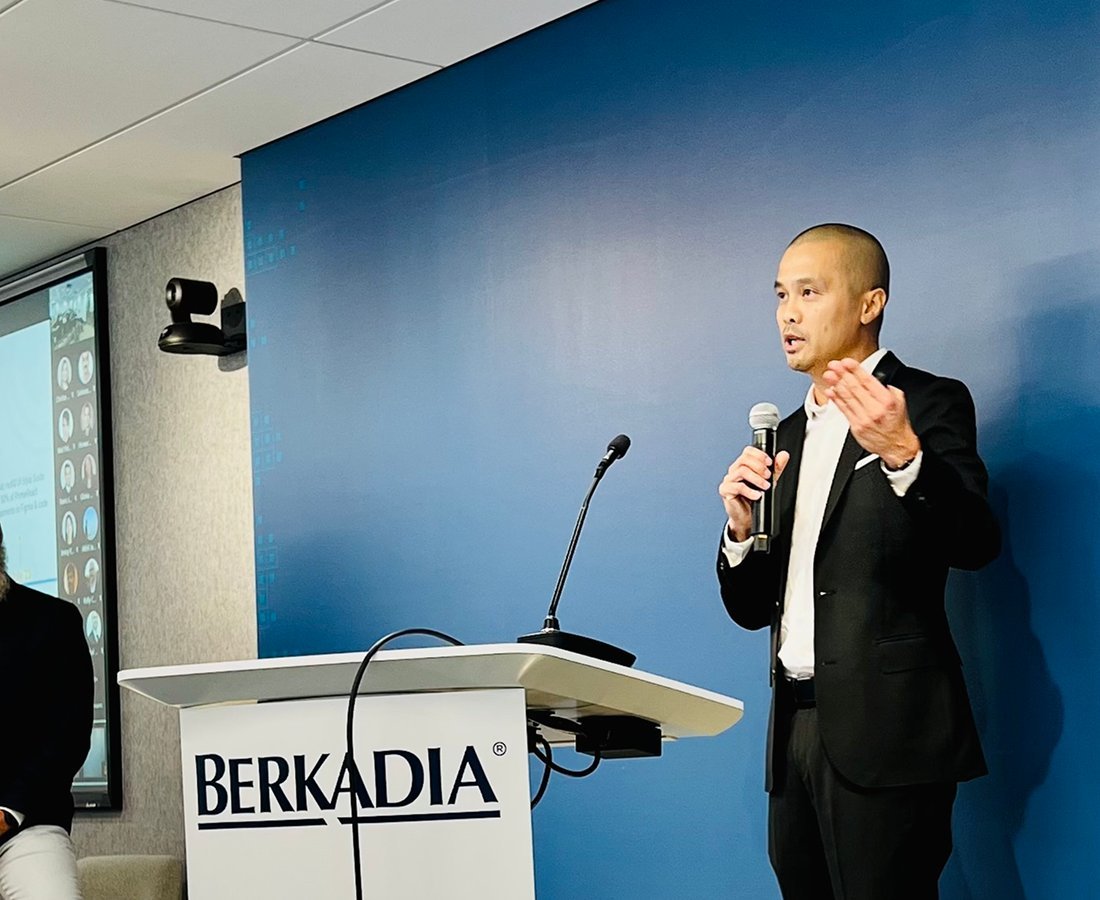
Elias Sipin presenting at the Berkadia podium

Presenting product design strategy at Berkadia's annual technology summit

Context

The Landscape in 2021

Berkadia is a joint venture between Berkshire Hathaway and Jefferies Financial Group. The company originates over $30 billion in annual commercial real estate loans and operates across Mortgage Banking, Investment Sales, Servicing, and multiple technology platforms serving both internal teams and external clients.

When I arrived in 2021, the design function was an 8-person team with no operating model. Designers got assigned to projects reactively. There were no shared standards and no research practice. Nobody had visibility into the product roadmap, and each business vertical operated on its own, which meant fragmented user experiences, duplicated effort, and growing design debt across every platform.

The Chief Product Officer hired me to fix this. Not to redesign screens. To build an organization that could drive experience quality at enterprise scale while the business was growing and the product landscape was shifting underneath us.
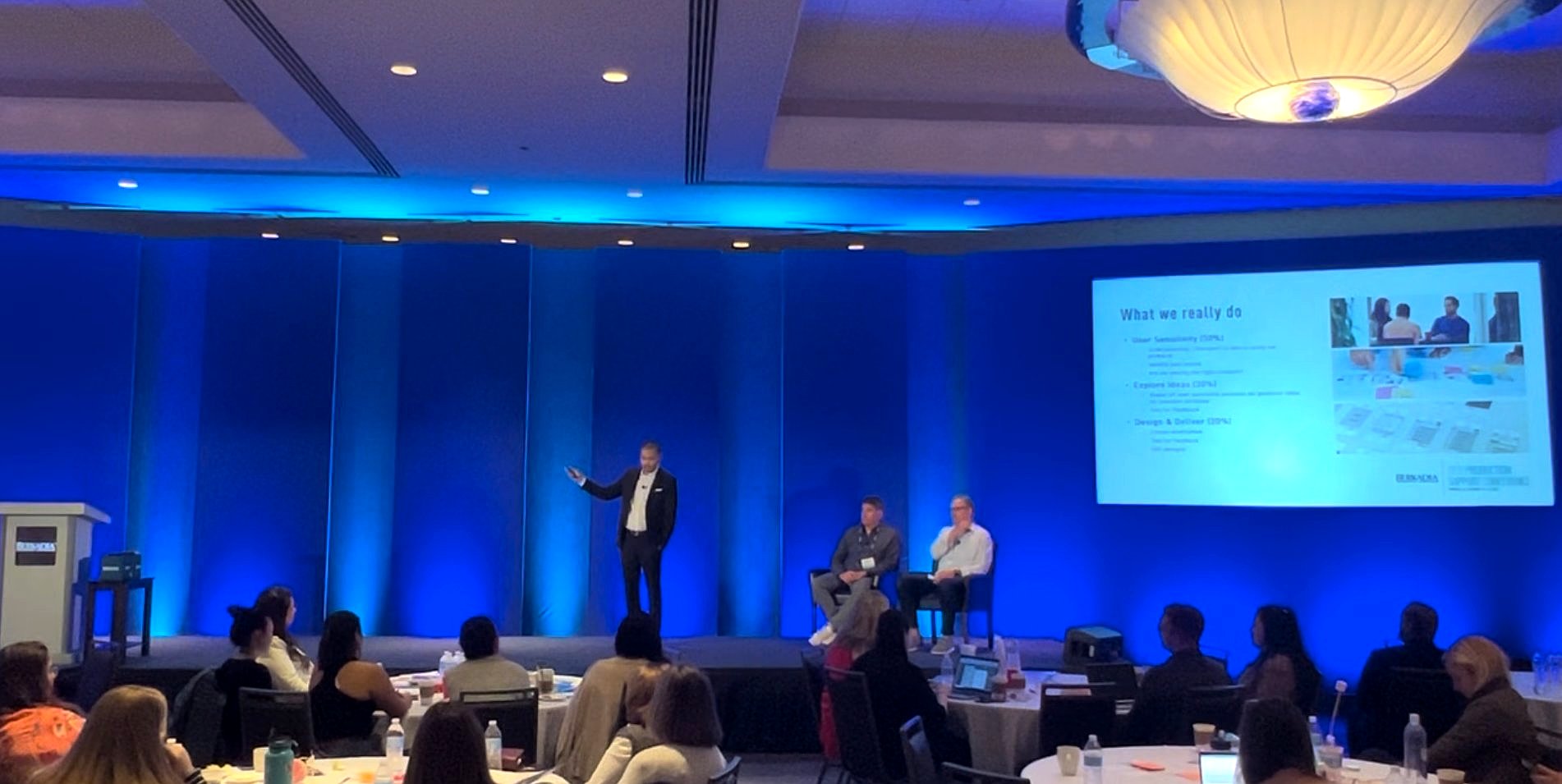
Elias Sipin presenting on stage at Berkadia conference with executives and audience

On stage at the annual conference, presenting how the design organization actually operates across the business

Executive Decisions

Three Decisions That Defined the Transformation

Decision 01
Build the Organization While Shipping the Product

There was no luxury of stopping work to restructure. The business needed experience design, product design, and OKR delivery across a growing portfolio from day one. So we built the organization in parallel with the product work.

Over the first six months I restructured the team around business verticals, establishing dedicated pods for Mortgage Banking, Investment Sales, Servicing, and Innovation. I hired researchers, design ops leads, and senior designers who could own their domains. We built a shared component library and created a design review process that tied design decisions back to business outcomes. All while continuing to ship across every active product.

The tradeoff was real: we were doing two jobs at once, building the machine and running it at the same time. But it meant the organizational foundation grew alongside the work instead of arriving too late to matter.

Rejected: Pausing product delivery to restructure. The business couldn't wait and neither could we.
Decision 02
Bet on AI Before the Industry Did

In mid-2023, before most commercial real estate firms had an AI strategy, I was asked to lead the creation of BerkadiaGPT, an enterprise AI assistant for mortgage banking and investment sales workflows. The team was small: the VP of Product, a group of data scientists we had gained through an acquisition, and on the design side, myself and one of my researchers.

We didn't build a demo. We ran a 4-phase discovery program across Mortgage Banking and Investment Sales. We interviewed 13 stakeholders from VPs to analysts, synthesized findings into concrete use cases (data assistant, guideline extraction, document analysis, BOV generation), and scored each one on desirability, feasibility, and viability to figure out what to build first.

The research told us something that shaped the entire product direction: accuracy and data access were the top concerns across every business unit, not speed or novelty. So we prioritized the Data/Research Assistant use case (10.0 desirability, 9.0 viability) over flashier features like automated BOV generation.

Rejected: Building AI features based on executive assumptions instead of evidence.
Decision 03
Fix the Platform, Don't Redesign It

RedIQ was the highest-revenue product in the portfolio, Berkadia's client-facing deal management platform. Stakeholders wanted a full visual redesign. I pushed back.

The real problems were structural. The data architecture was brittle, workflows were inefficient, and missing functionality forced users into manual workarounds. A visual refresh would have consumed 6+ months and delivered cosmetic improvement without solving any of that.

We prioritized a platform rewrite focused on data integrity, customizable views, and workflow automation instead. We stabilized the Salesforce integration for ADM/DAS at the same time. The result was measurable business value delivered incrementally rather than a big-bang launch that risked regression.

Rejected: Full visual redesign of RedIQ. The problems were in the data layer, not the interface.
Scope

What I Owned

I was responsible for total experience quality across every Berkadia product, both consumer-facing and enterprise. That meant influencing roadmap priorities, driving cross-functional alignment, and making tradeoff decisions across competing business unit needs. I had no direct budget authority, so every initiative required building the case and earning buy-in.

Products

Surfaces Under My Direction

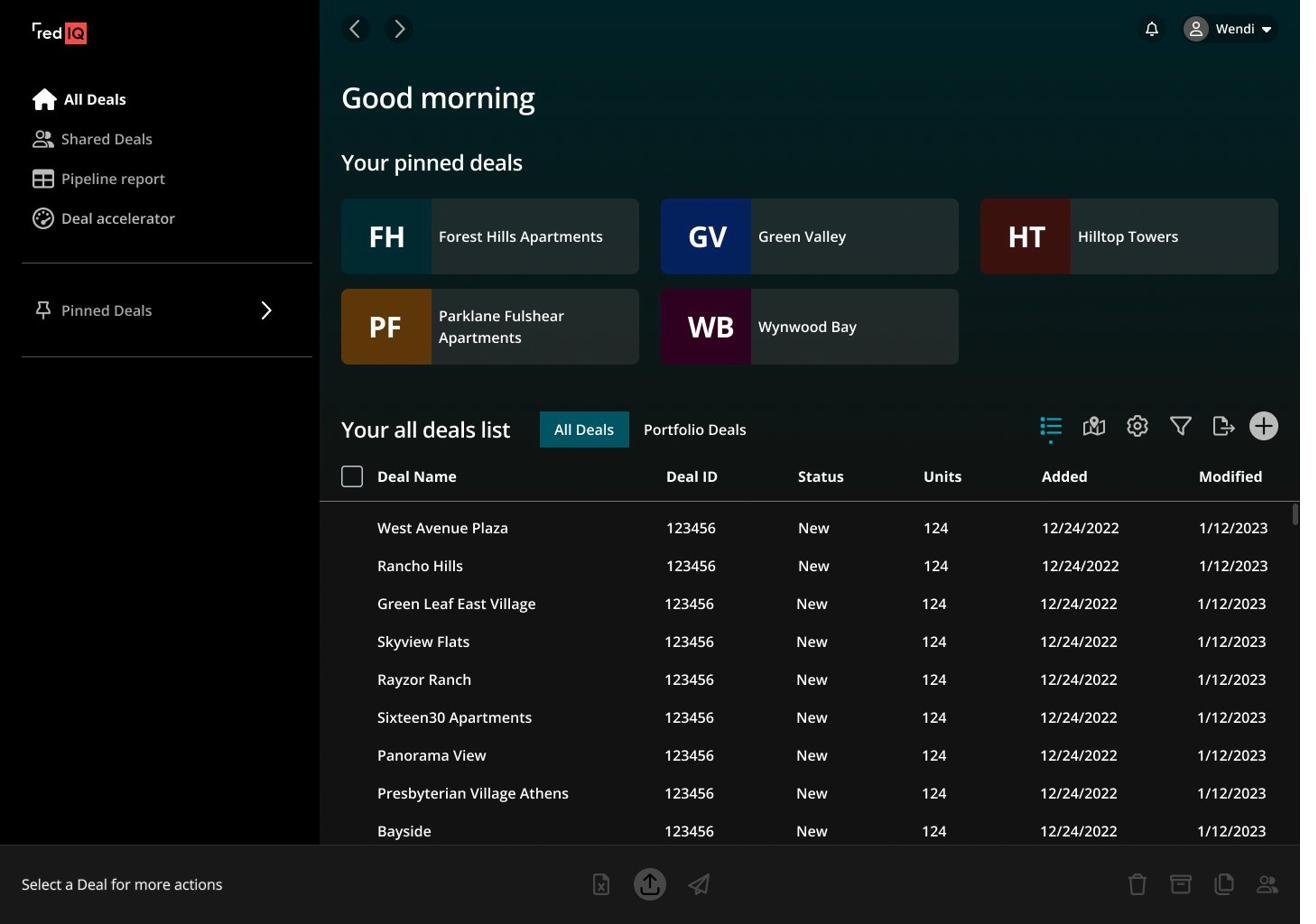
RedIQ deal management dashboard showing pinned deals and deal list
RedIQ - Client-Facing Deal Management 4.5k leads / $1B production volume

We rebuilt the platform around data integrity, customizable views, and workflow automation. The goal was to eliminate the manual workarounds that were costing deal teams hours every week.

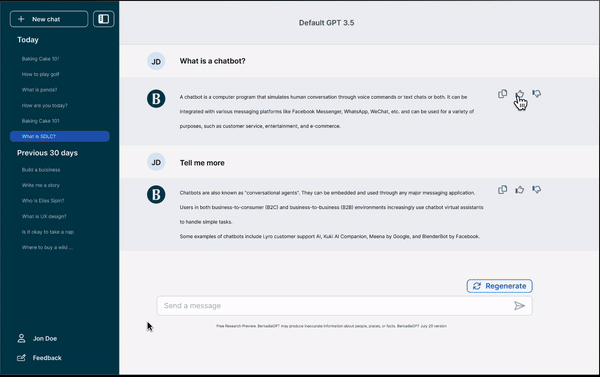
BerkadiaGPT conversational AI interface for commercial real estate
BerkadiaGPT First enterprise AI product at Berkadia

An AI assistant built for mortgage banking and investment sales. Research pointed us toward data access and guideline extraction as the highest-value use cases, so that's where we started.

Outcomes

What We Delivered

Here's what the work added up to over three years:

$12M+
Revenue impact across product portfolio
8 to 47+
Team scaled across 6 verticals
35%
Reduction in time-to-market
$1B
Production volume via RedIQ leads
1.5k
CAs signed through ADM/DAS (2022)
6
Business verticals supported simultaneously
Reflection

What I Learned

Three years inside a regulated financial services enterprise will teach you things you can't pick up anywhere else. Some of them were hard lessons.

What Broke

I underestimated how long it takes to shift a culture from treating design as a service desk to treating it as a strategic function. Even with executive sponsorship, some business units took over a year to fully integrate design into their planning cycles. Looking back, I should have embedded designers directly in business unit meetings from day one instead of waiting for the formal pod structure to be ready.

What I'd Do Differently

I would have started a lightweight research practice in month one, before hiring a dedicated researcher. The insights from BerkadiaGPT discovery proved how much credibility you earn with stakeholders when you show up with evidence. If I had been generating those kinds of findings earlier, the organizational transformation would have moved faster because the data would have made the case for me.

Want to talk about this work?

Happy to walk through the org transformation, the AI initiative, or any of the platform decisions in more detail.

Get in Touch
-e